THE GAMBIA

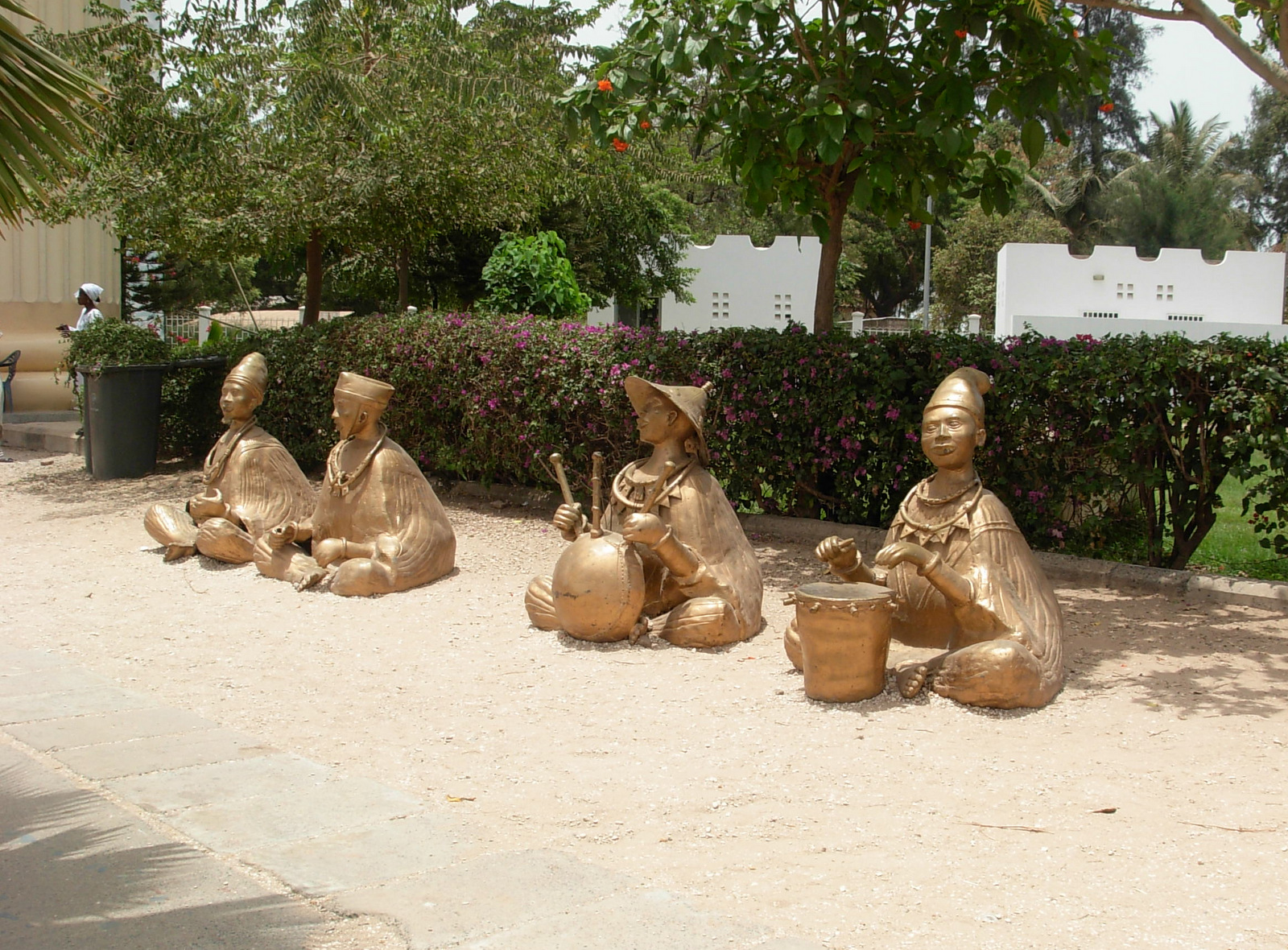
The mellow sound of a marimba and harp-like kora welcomed us to Banjul, the capital of The Gambia. It was a Friday in this heavily Moslem country. Prayers were finishing at mosques, which despite being in abundance, were insufficient in size so that even gas stations were used for worshippers. Later, streets and walkways were filled with men walking home with rolled up prayer mats under their arms while holding on to their little boys’ hands.
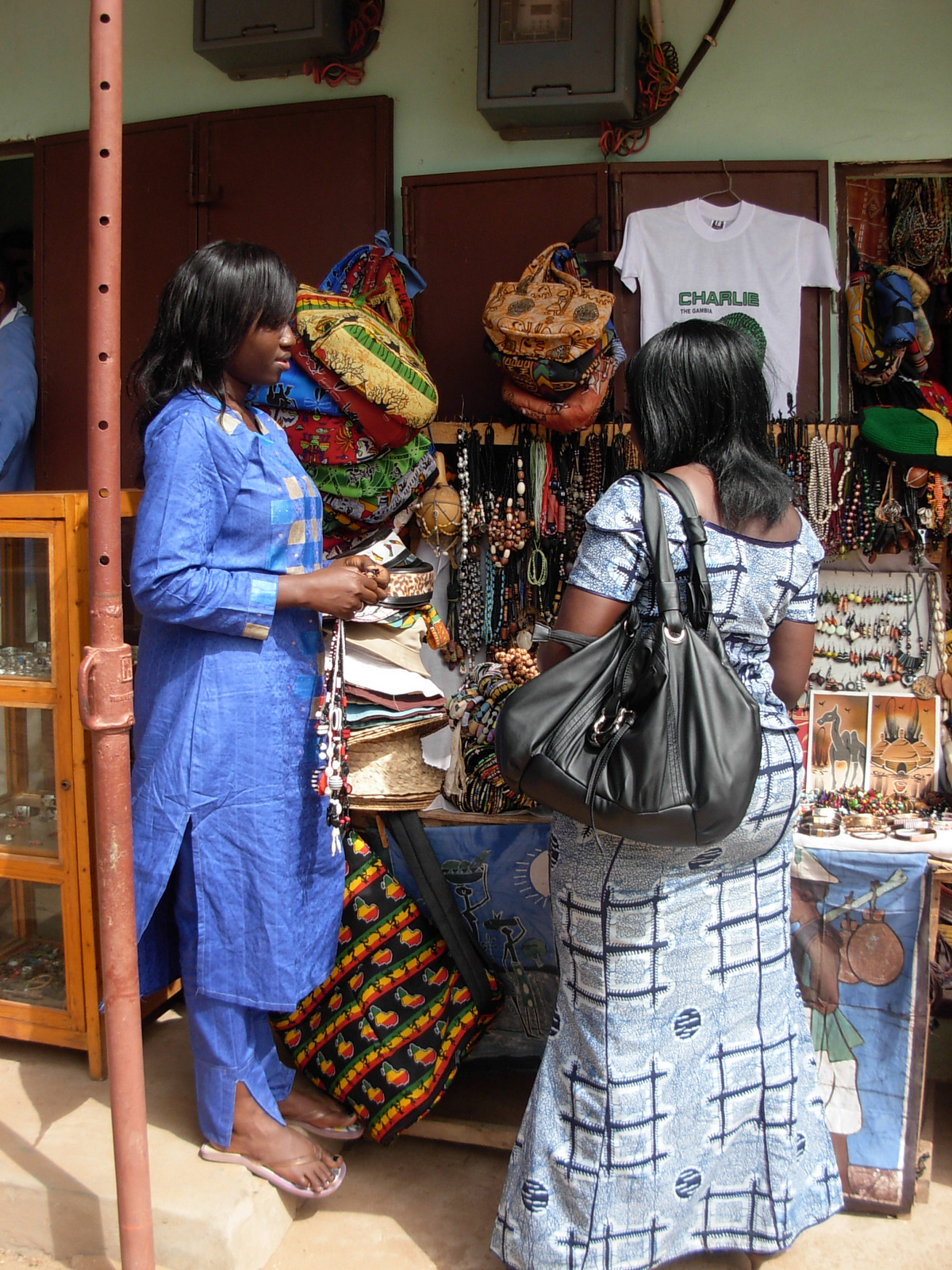
Women wore long dresses often in blue or mauve but even men were brilliant in their canary yellow, magenta, saffron, teal and lime green tunics, contrasting colored pants and pointed backless slippers. The passing scene was typically African with goats, broken pavements, tiny shops, a colorful central market, ambulatory traders and oh so many children, although instead of the red dirt and palm trees found farther south, Sahara sands dusted the scene and greenery was in short supply.
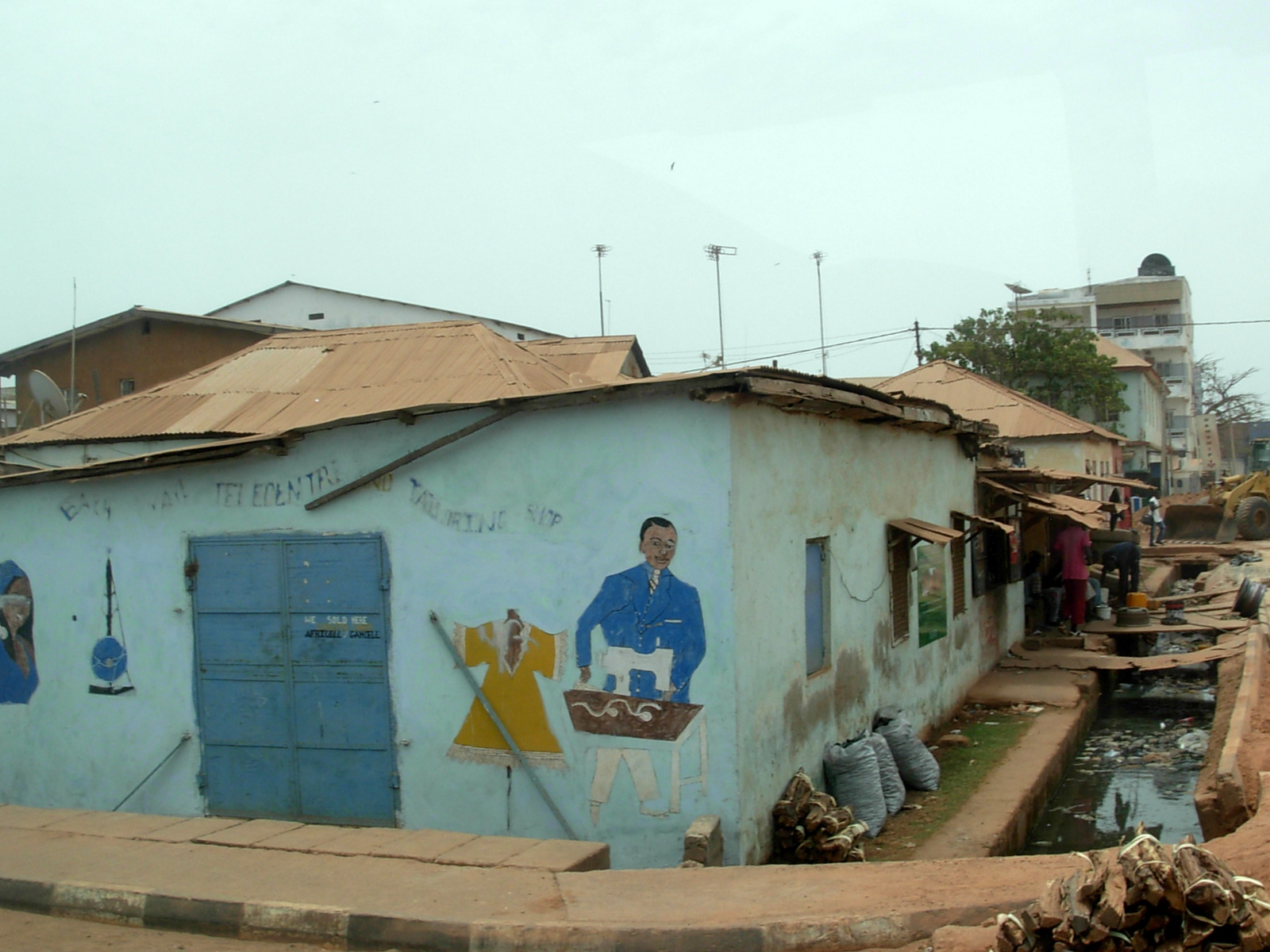
The tiny country lining the lower reaches of the river Gambia is the smallest in Africa and is surrounded by French-speaking Senegal. It is an English-speaking remnant of British colonialism, soon apparent when we drove by the dilapidated-looking and now misnamed Queen Victoria Teaching Hospital. Always intrigued by colorful signage in Africa, the first one to catch my attention was on the hospital; it proclaimed that “Allah is the Greatest.” The next sign, along the wall next to the hospital, brought viewers back down to reality. It said, “avoid urinating here.” The admonition was followed by a man dressed in a blue jacket and white pants sitting at a treadle sewing machine making a woman’s yellow dress.
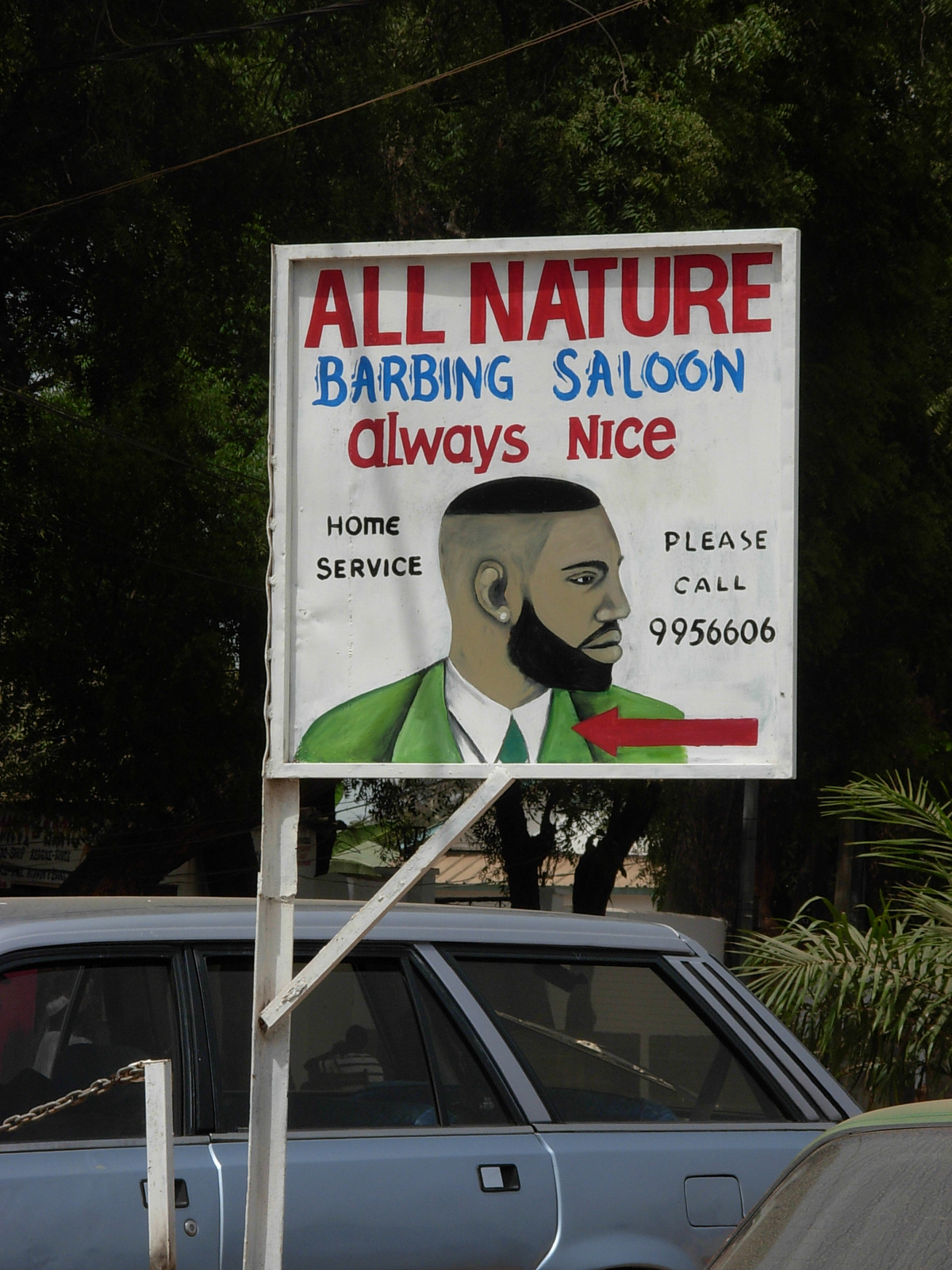 A barbershop sign recommended the “All Nature Barbing Saloon. Always Nice.”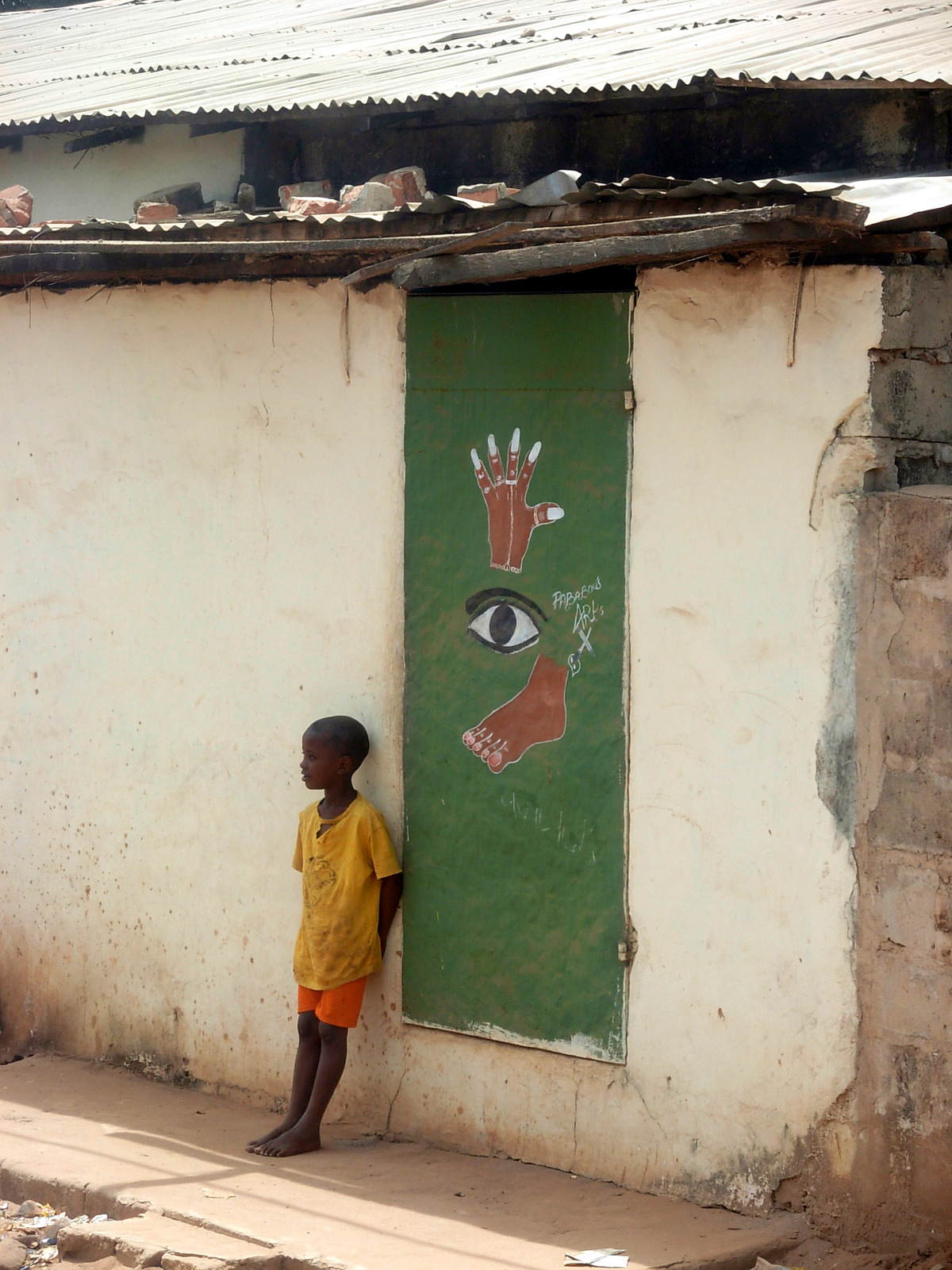
A small boy dressed in orange and yellow leaned against a green door decorated with an ambiguous painting of a hand, eye and foot. Was it a doctor’s ad or a fortune teller’s message?
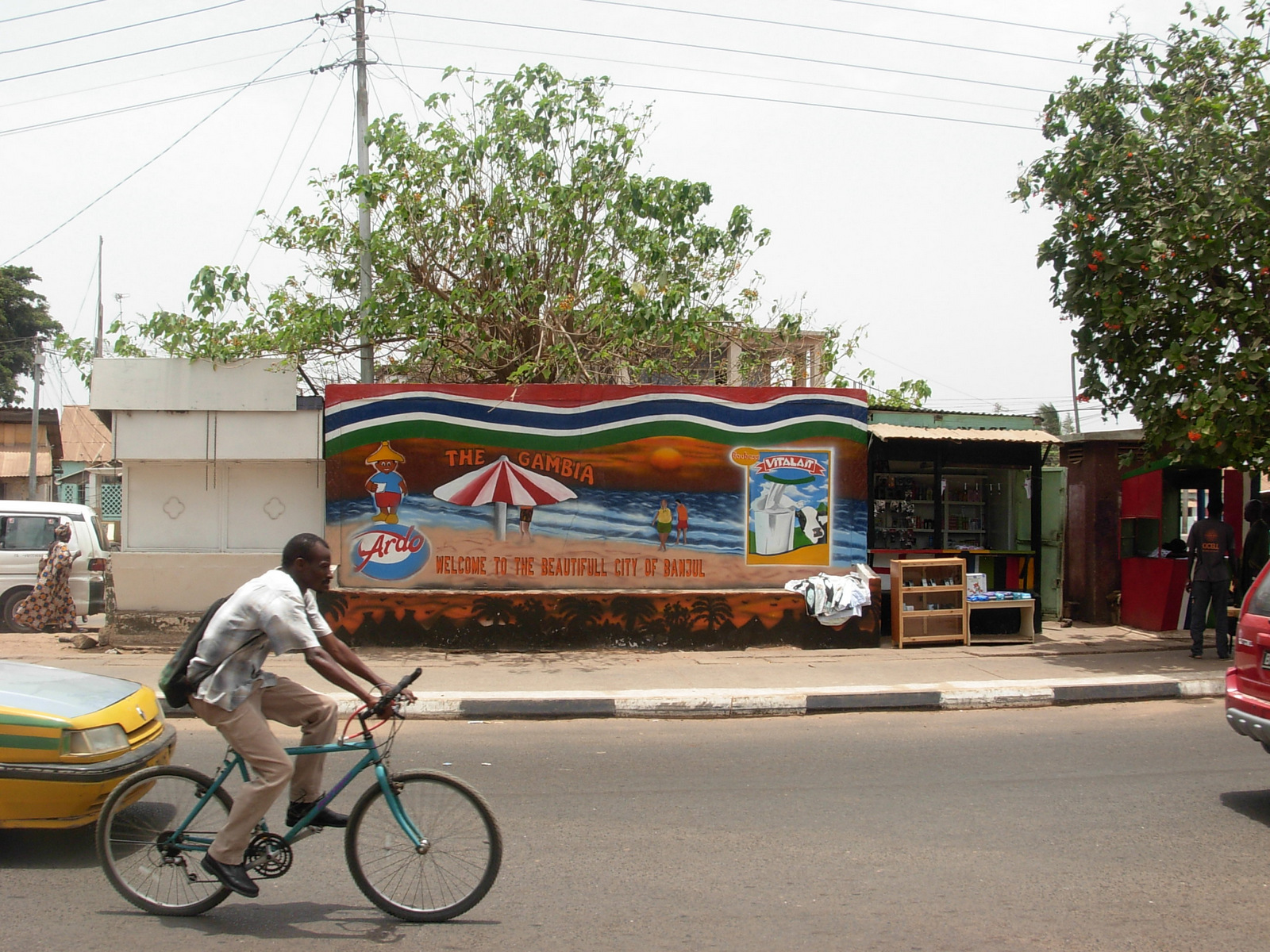 By the museum, full of interesting tribal artifacts and costumes, and instruments from the country’s rich musical heritage, we were greeted with “Welcome to the Beautiful City of Banjul.” Boosterism knows no bounds. Although advertised in Europe as a tourist destination for beaches and bird-watching (“The Smiling Coast of Africa” is their motto), our welcome seemed dubious as several groups of scowling men gestured menacingly and, disconcertingly, boys pounded on girls to grab candy that some tourists attempted to share.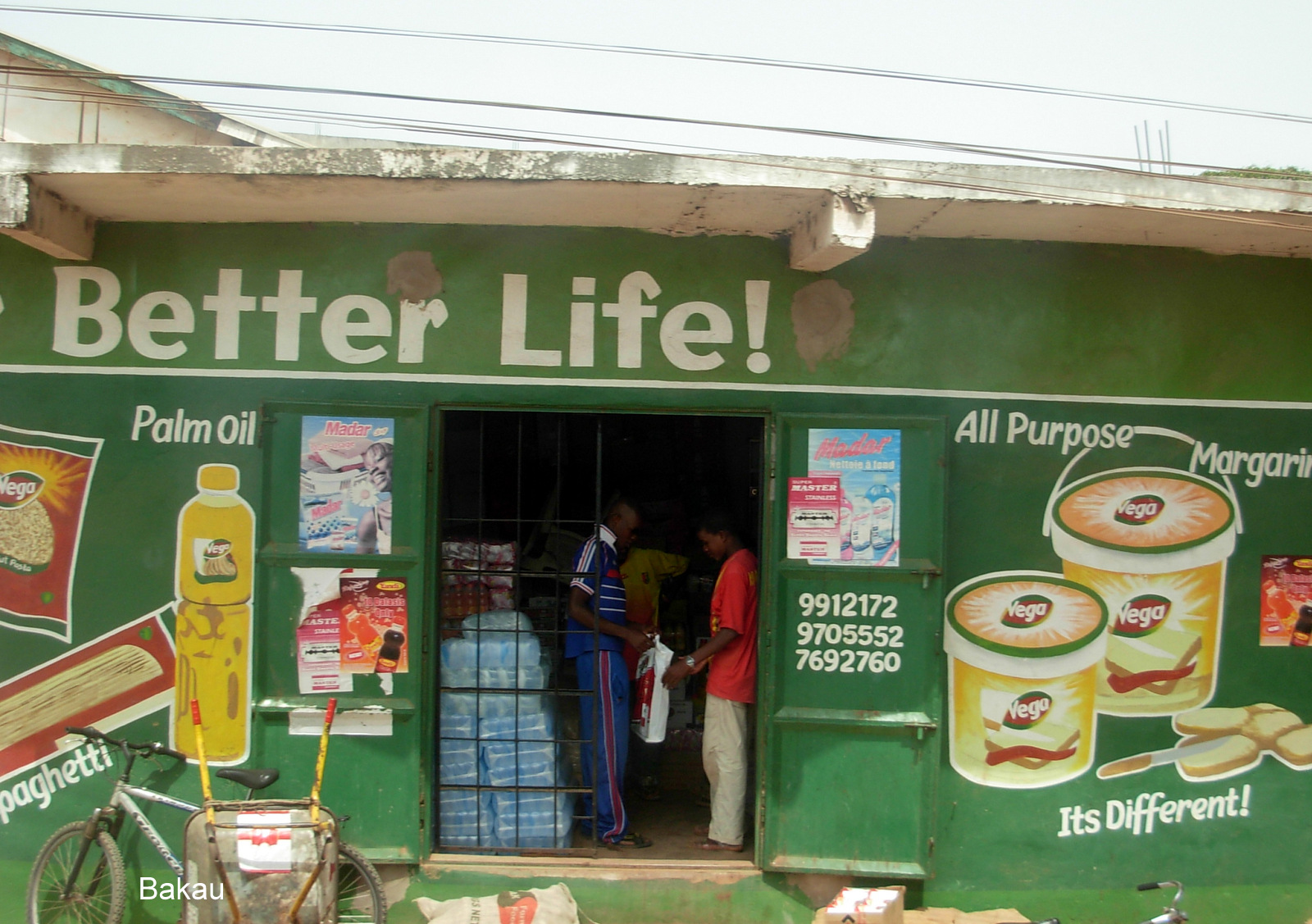
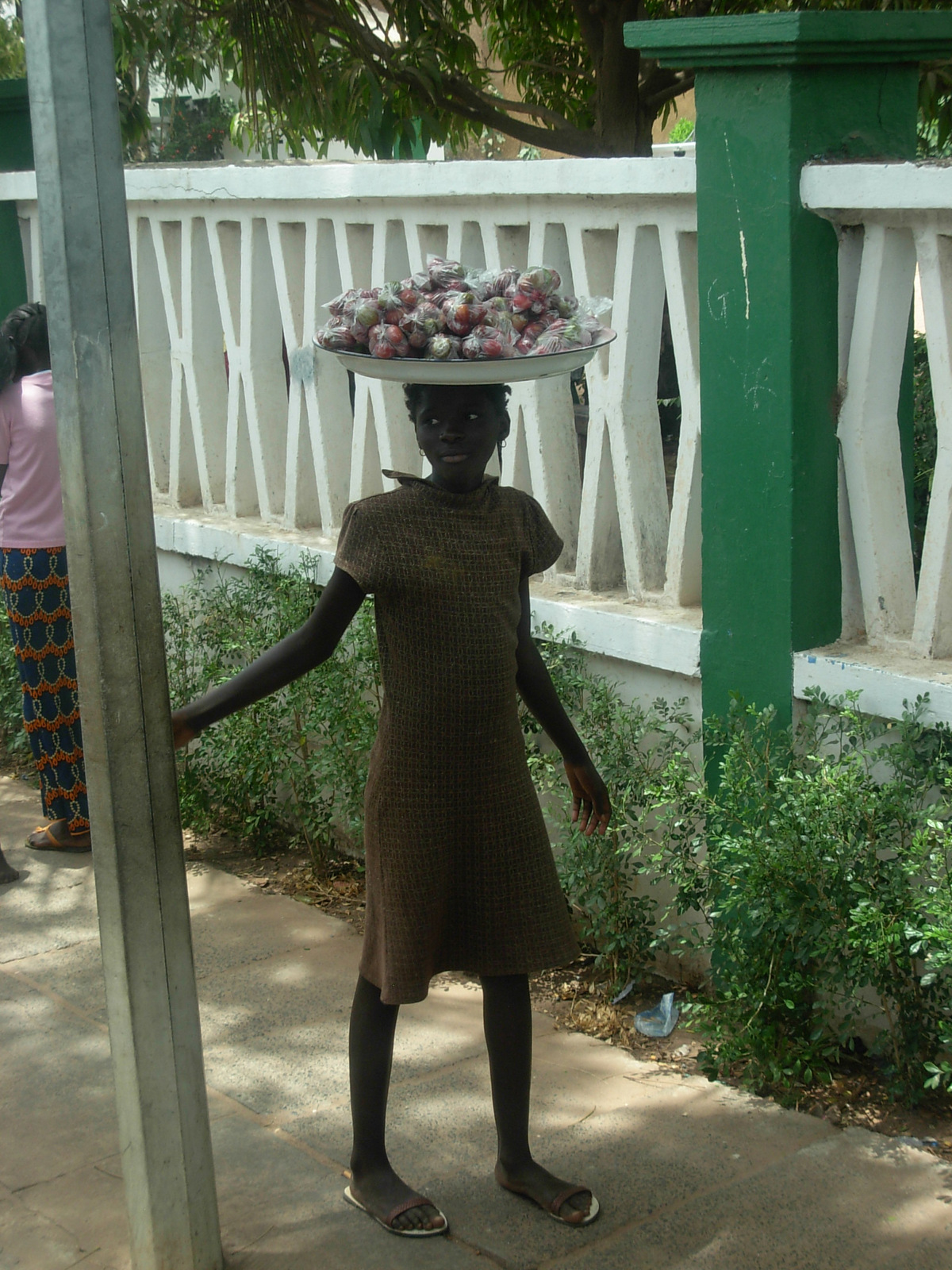
Colorful as the signs and many of the people are, on the whole the scene was discouraging with resigned families sitting idle in garbage-strewn yards while plastic bags flew in the desert breeze like kites. Literacy is low (under 20% for girls); AIDS is a plague; poverty is endemic. Illegal sand mining has severely eroded the coastline while workers on Chinese fishing boats unload tons of tuna for shipment home, the wealth of Africa moving to new colonialists. After all the intensity of day at dusk we watched small fishing boats in the estuary marking their presence solely by the faint lights of charcoal cooking fires. Even that idyllic African scene marked a very tough life. It’s hard to imagine what the populace of such a tiny strip of land could do to pull the country out of poverty. I have visited many poor countries but in Banjul, at least, The Gambia seemed to be the most unlikely to escape third-world status.
And yet …back home we wandered into a festival put on by the local Gambian association. A famous kora musician and his band were in town for an AIDS benefit. We ran into people who knew some of our friends and received a warm welcome by everyone. We sat to listen to the music and to watch as women and girls in bright sequined gowns and headdresses glitter and sparkle as they danced across the stage while opening their evening bags to extract what seemed like thousands of dollars into a tub. Perhaps the Gambian diaspora will manage to make enough of a difference and Gambia will have a “Better Life” after all.
TAGS